Why You Feel Exhausted After Lunch at Work — And How to Fix It
The 2–3 PM energy crash is not inevitable. It is almost always caused by what you ate for lunch. Here is the science behind it and what Ahmedabad office workers can do differently.
Just Salad team · 3 min read
It happens at almost every office in Ahmedabad. It is 2:30 PM. You just ate lunch an hour ago. And yet you can barely keep your eyes open, your focus has evaporated, and you are reaching for a second cup of chai.
This is called the post-lunch dip, and most people assume it is normal. It is not. It is almost entirely caused by what you ate — and it is completely avoidable.
The Science Behind Post-Lunch Fatigue
When you eat a carbohydrate-heavy meal — rice, roti, pasta, bread — your blood sugar rises rapidly. Your pancreas releases insulin to manage it. The insulin works too well, causing blood sugar to dip below the pre-meal level. This dip is what makes you feel sluggish, unfocused, and sleepy.
The bigger the blood sugar spike, the harder the crash. A meal of white rice with dal and two rotis can spike blood sugar by 40–60 mg/dL in 30 minutes and then crash it equally fast. Your body is essentially riding a glucose rollercoaster during what should be your most productive afternoon hours.
Why Canteen Food Makes It Worse
Most office canteens in Ahmedabad serve high-glycaemic meals by default:
White rice (GI: 72) instead of brown rice (GI: 50)
Refined flour rotis (GI: 62)
Little to no raw vegetables or fibre
Dal as the primary protein (incomplete protein, lower satiety)
High cooking oil content (slows digestion and adds to afternoon heaviness)
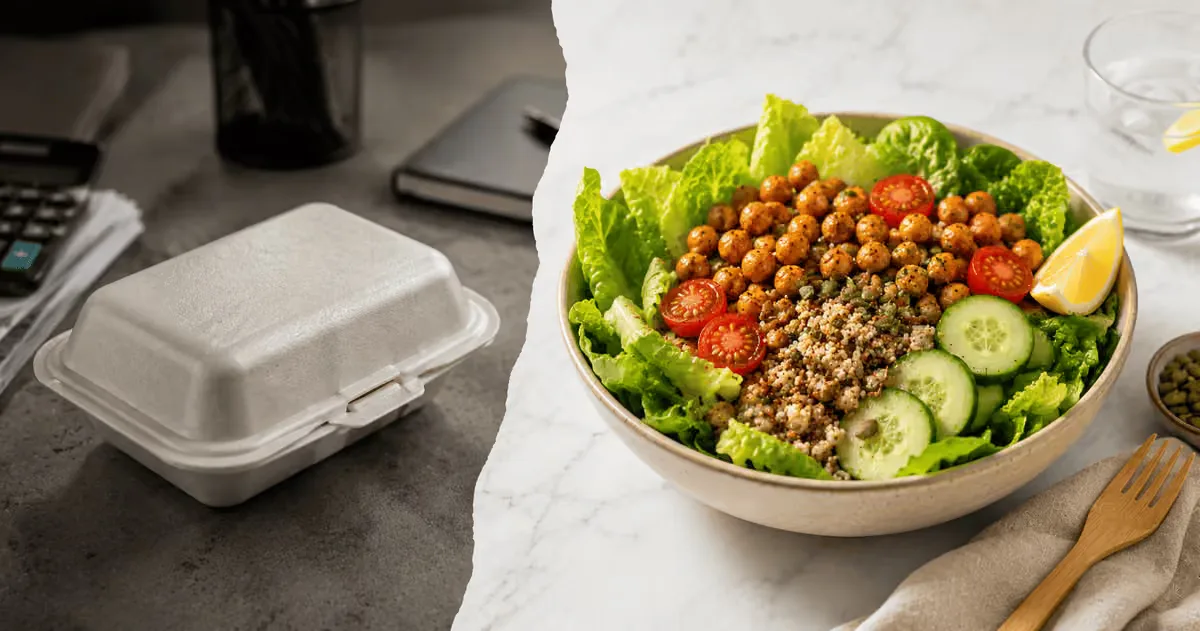
A typical canteen thali can easily hit 700–900 calories with 8–14g protein and 70–100g carbohydrates. That is the exact formula for a 2 PM crash.
What to Eat to Avoid the Afternoon Slump
Research on sustained afternoon cognitive performance consistently points to the same lunch profile:
High protein: 18–25g keeps blood sugar stable and supports neurotransmitter production (protein provides the amino acids needed for dopamine and serotonin)
High fibre: 8–12g from vegetables, legumes, and seeds slows glucose absorption
Low glycaemic carbs: Replace white rice and maida with whole grains, lentils, chickpeas, or quinoa
Moderate total calories: 350–500 is the sweet spot for alert afternoons; 700+ consistently produces fatigue
The Indian Office Lunch That Does Not Cause a Slump
You do not have to give up Indian flavours to avoid post-lunch fatigue. The solution is adjusting ratios:
More raw and lightly cooked vegetables (fibre, micronutrients)
More legumes and paneer for protein
Less rice, more salad greens or sprouts as the base
Homemade dressings with lemon and spices instead of heavy gravies
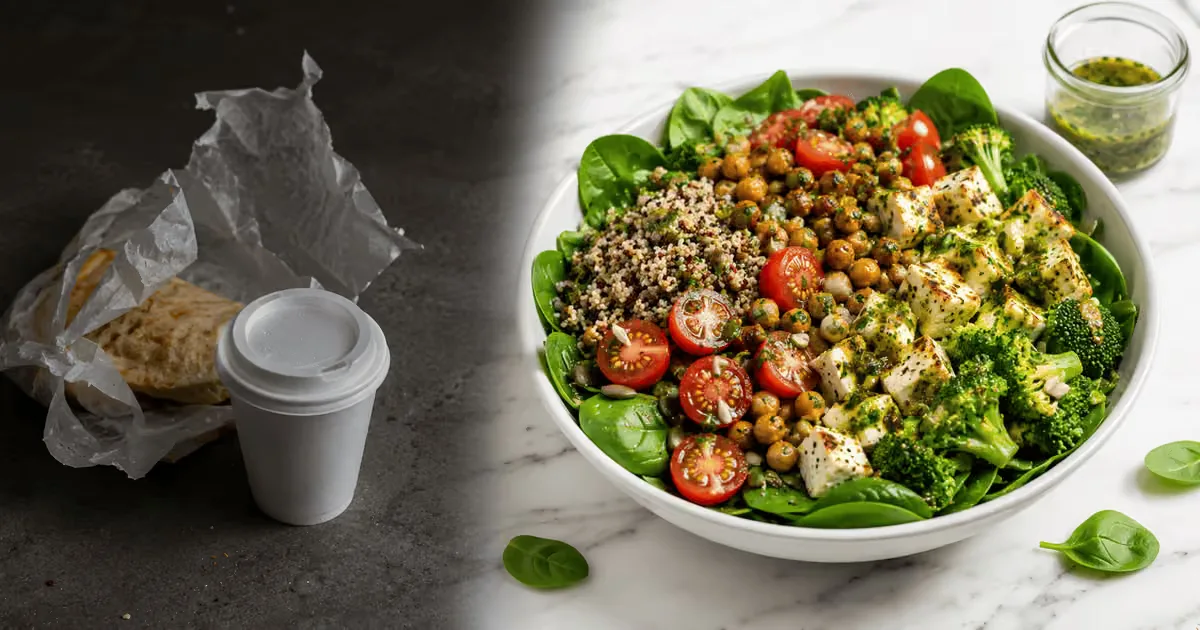
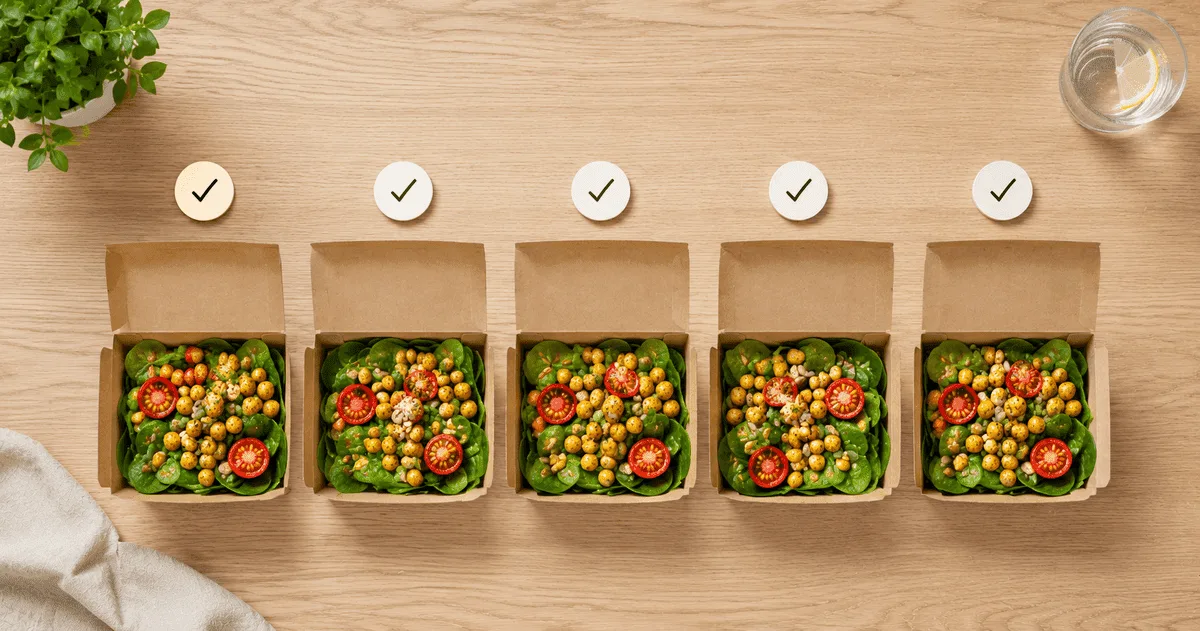
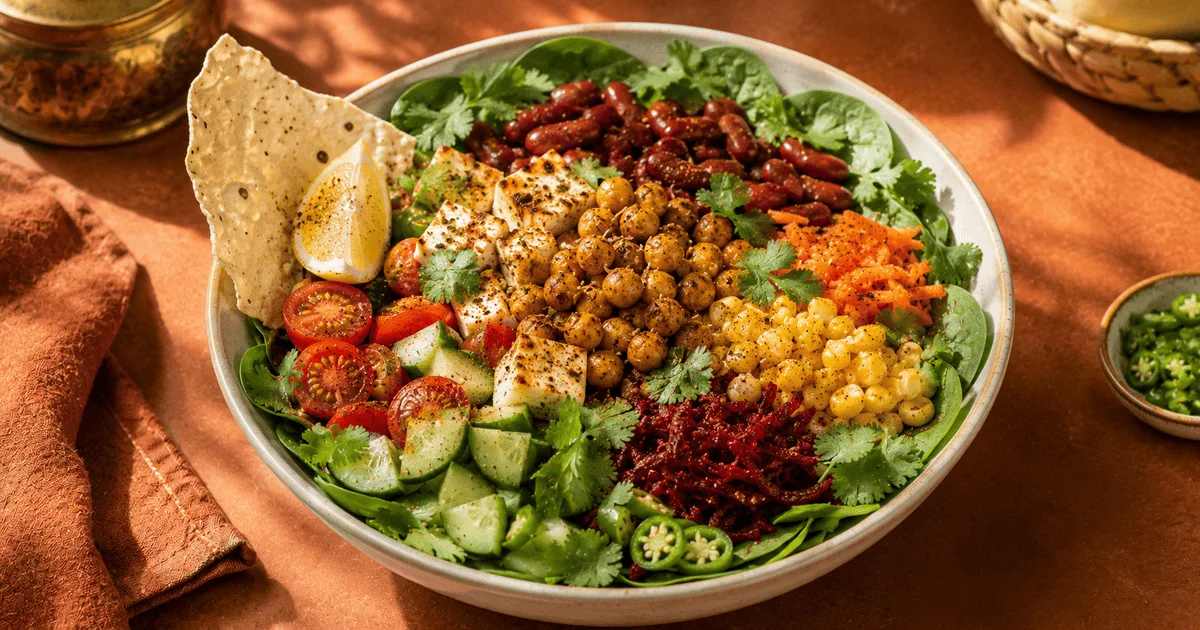
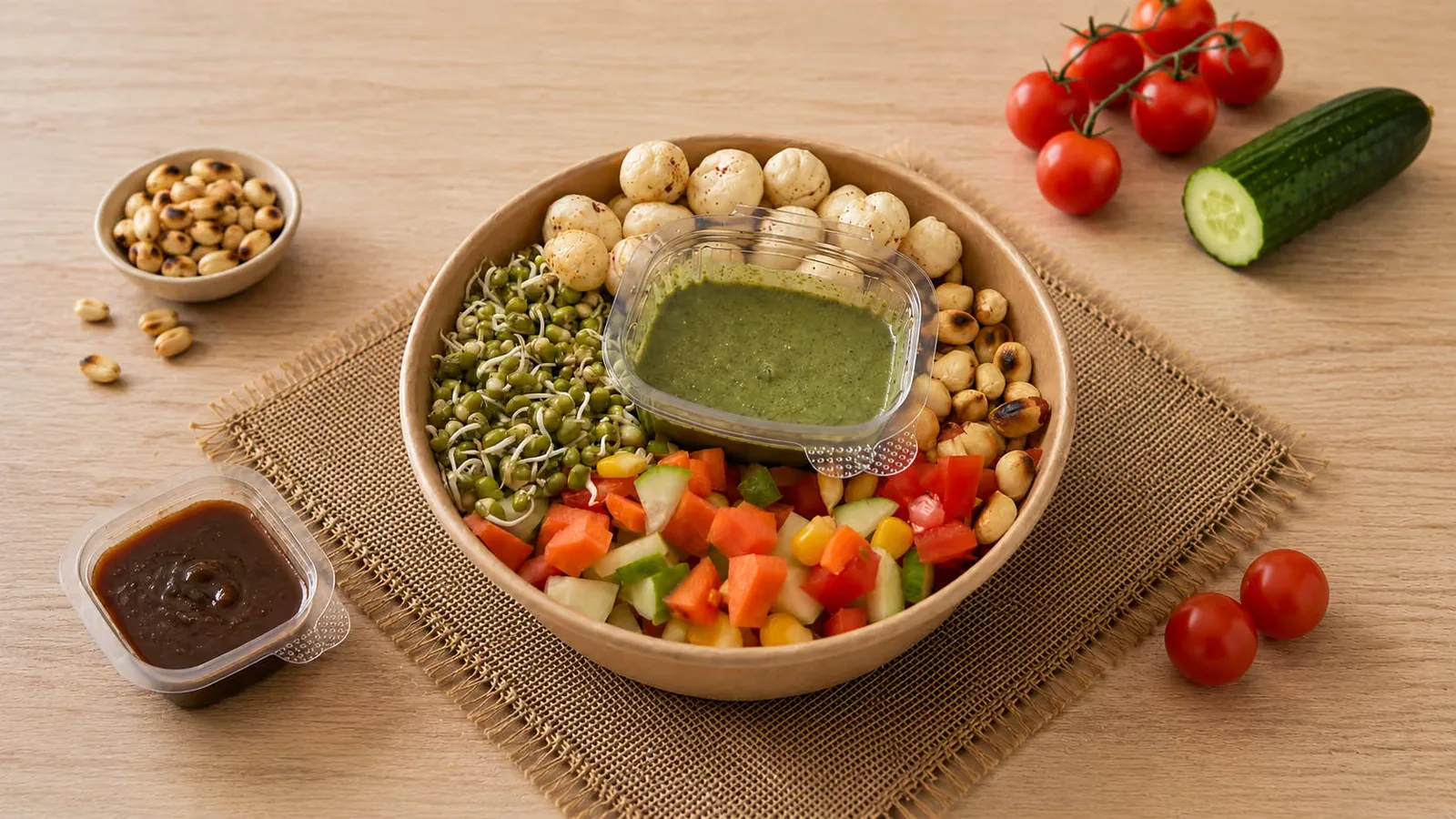
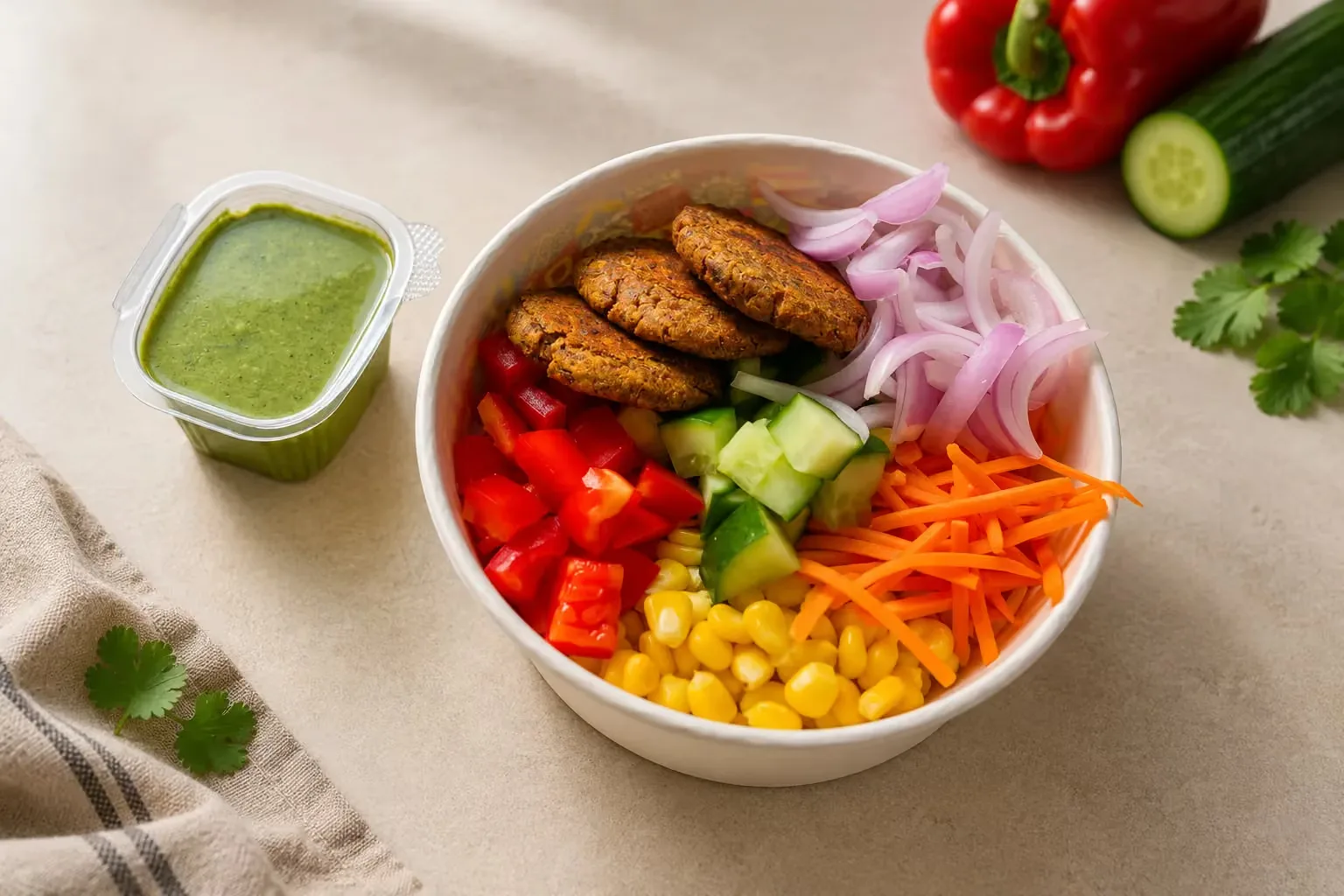
Just Salad's rotating weekly menu is built around exactly this principle. Bowls like the Rajma Power Bowl (22g protein, 380 kcal) or the Paneer Tikka Salad (19g protein, 340 kcal) are designed to keep you alert through 5 PM without a slump. See the current weekly menu for what is available this week.
Other Factors That Make the Slump Worse
Food is the main driver, but a few other factors compound it:
Dehydration: Most office workers are mildly dehydrated by lunchtime. A 1–2% drop in hydration significantly impairs concentration. Drink a full glass of water with lunch.
Eating too fast: Eating in under 10 minutes prevents proper satiety signalling, leading to overeating.
Skipping breakfast: If you skipped breakfast, you are more likely to overeat at lunch, making the crash worse.
Sedentary sitting: A 5-minute walk after lunch improves post-meal blood glucose by 30%.
Practical Changes You Can Make Starting Tomorrow
Replace white rice with a legume-based dish or salad base
Add one cup of raw vegetables to every lunch
Aim for 18g+ protein at lunch (roughly two eggs, 80g paneer, or 100g chickpeas)
Drink 250ml water with lunch
Take a 5-minute walk after eating
The afternoon slump is optional. Most people just have not been given the information to opt out of it.
From our kitchen
Pick a plan, or just try one bowl
Choose Weekly or Monthly below, or start with a single ₹220 bowl first, no plan needed.
Noon 11:00 AM - 1:00 PM or Evening 7:00 PM - 9:00 PM, Monday to Saturday. Free delivery in Gota and nearby, and all along SG Highway. Skip any day until 11 PM the night before.
Most people do not connect their afternoon productivity slumps, mood swings, or constant snacking to what they ate at lunch. Here are 10 clear signals that your lunch is working against you.
Most people try to eat healthier at work and fail within two weeks. Here is why habits fail — and the simple system that makes healthy office eating automatic.
Western salads often feel unsatisfying in an Indian context — wrong flavours, wrong portions, wrong protein. Here is how Indian-style salad bowls differ and why they actually work as a full meal.