High-Protein Pure Veg Lunch Ideas for Ahmedabad Professionals
Getting enough protein on a pure vegetarian diet takes planning, especially at lunch. Here are practical high-protein veg lunch options that actually work for Ahmedabad office workers.
Just Salad team · 3 min read
Protein is the most under-consumed macronutrient in the average Ahmedabad office worker's diet. Most pure vegetarians get 30–45g of protein per day, against a target of 0.8–1g per kg of body weight (60–80g for a 70kg person). Lunch is the meal where this gap is most fixable.
Here is a practical guide to getting 18–25g of protein from a pure veg lunch — without resorting to protein powders or eating the same paneer sabzi every day.
Why Most Veg Office Lunches Are Protein-Deficient
A standard canteen thali — dal, sabzi, two rotis, rice — typically contains:
Dal: 6–8g protein (in a typical ¾ cup serving)
Sabzi: 1–3g protein
Two rotis: 4–6g protein
Total: 11–17g protein
That is a significant shortfall from the 18–25g target for a satisfying, slump-free afternoon. The fix is adding a high-protein food as the centrepiece of lunch, not a side.
The Best Pure Veg Protein Sources for Lunch
Paneer — 18g protein per 100g
The most bioavailable pure veg protein. Fresh paneer (not processed cheese) has a protein quality score comparable to eggs. 80–100g of paneer in a salad or bowl adds 14–18g of high-quality protein. The catch: paneer is also calorie-dense (~260 kcal per 100g), so quantity matters.
Chickpeas (Chana) — 15g protein per 100g cooked
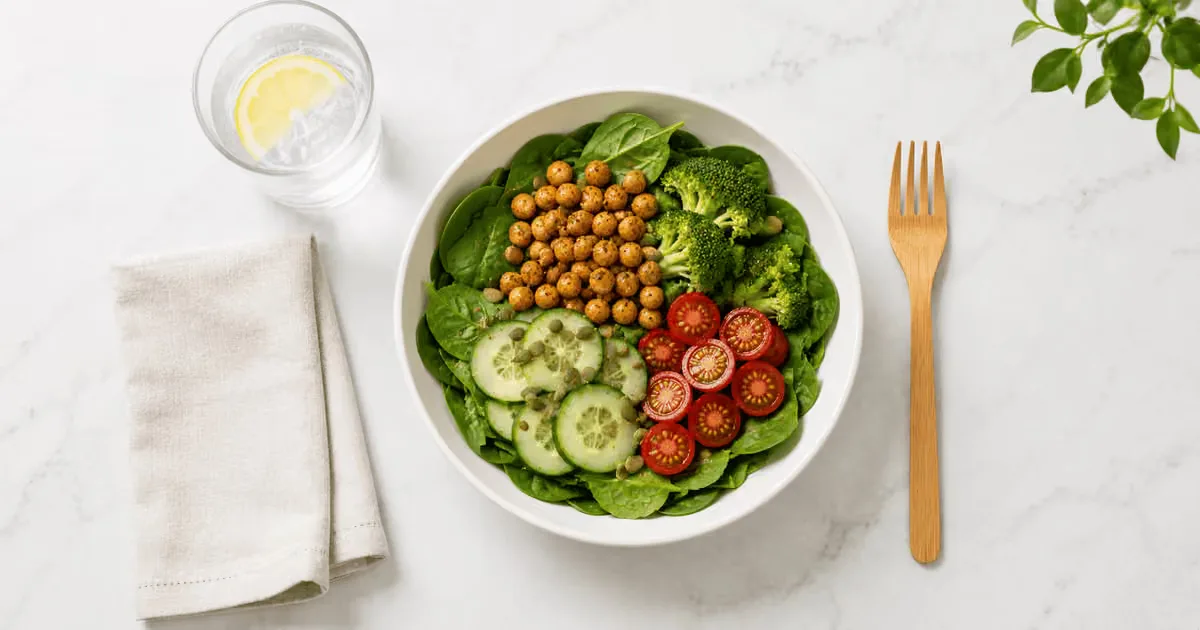
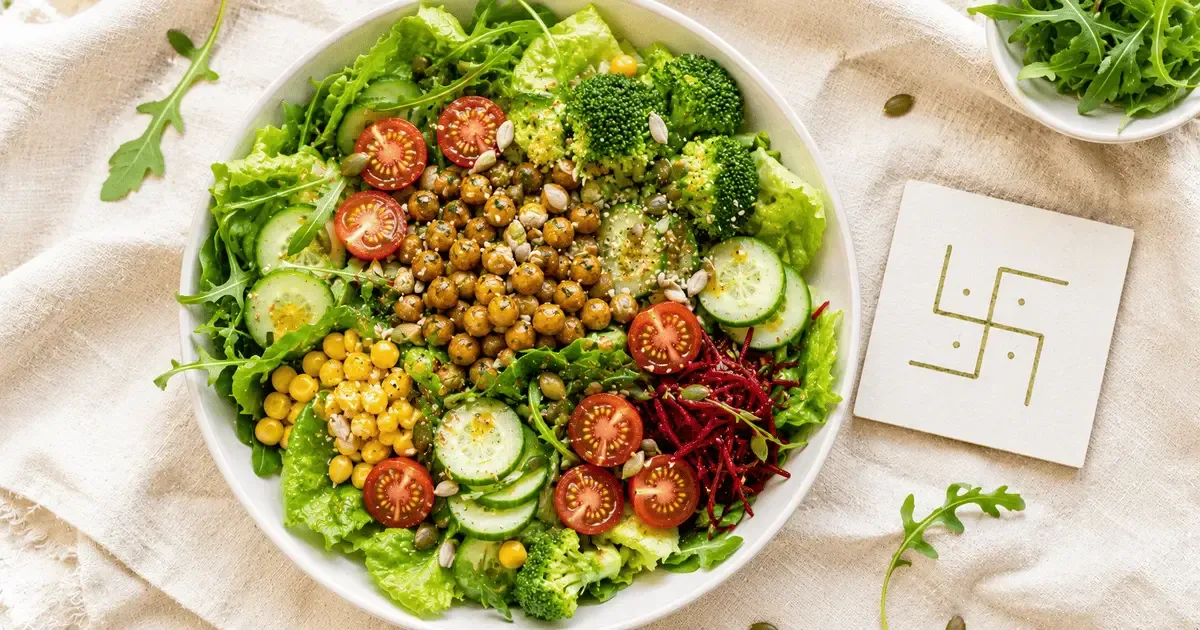
One cup of cooked chickpeas has 15g protein, 12g fibre, and a low glycaemic index of 28. Sprouted chickpeas are even better — sprouting increases protein availability and adds vitamin C. A chickpea salad bowl is one of the best office lunches for sustained energy.
Rajma (Kidney Beans) — 14g protein per cup cooked
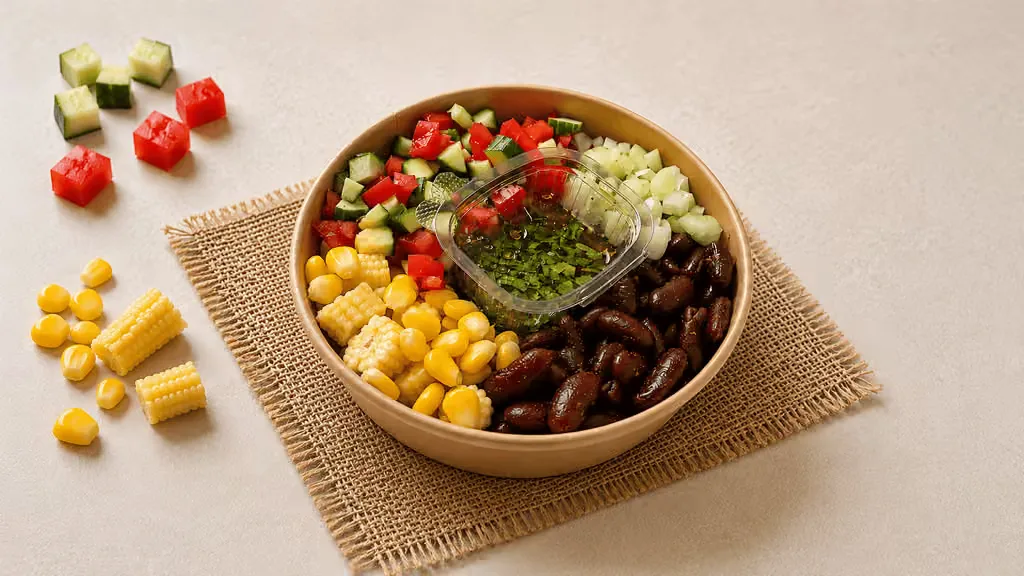
High in both protein and fibre. Unlike dal, rajma is a complete meal base rather than a side. Rajma salad bowls with raw vegetables, lemon dressing, and herbs are increasingly popular for good reason.
Moong Dal (Sprouted) — 14g protein per cup
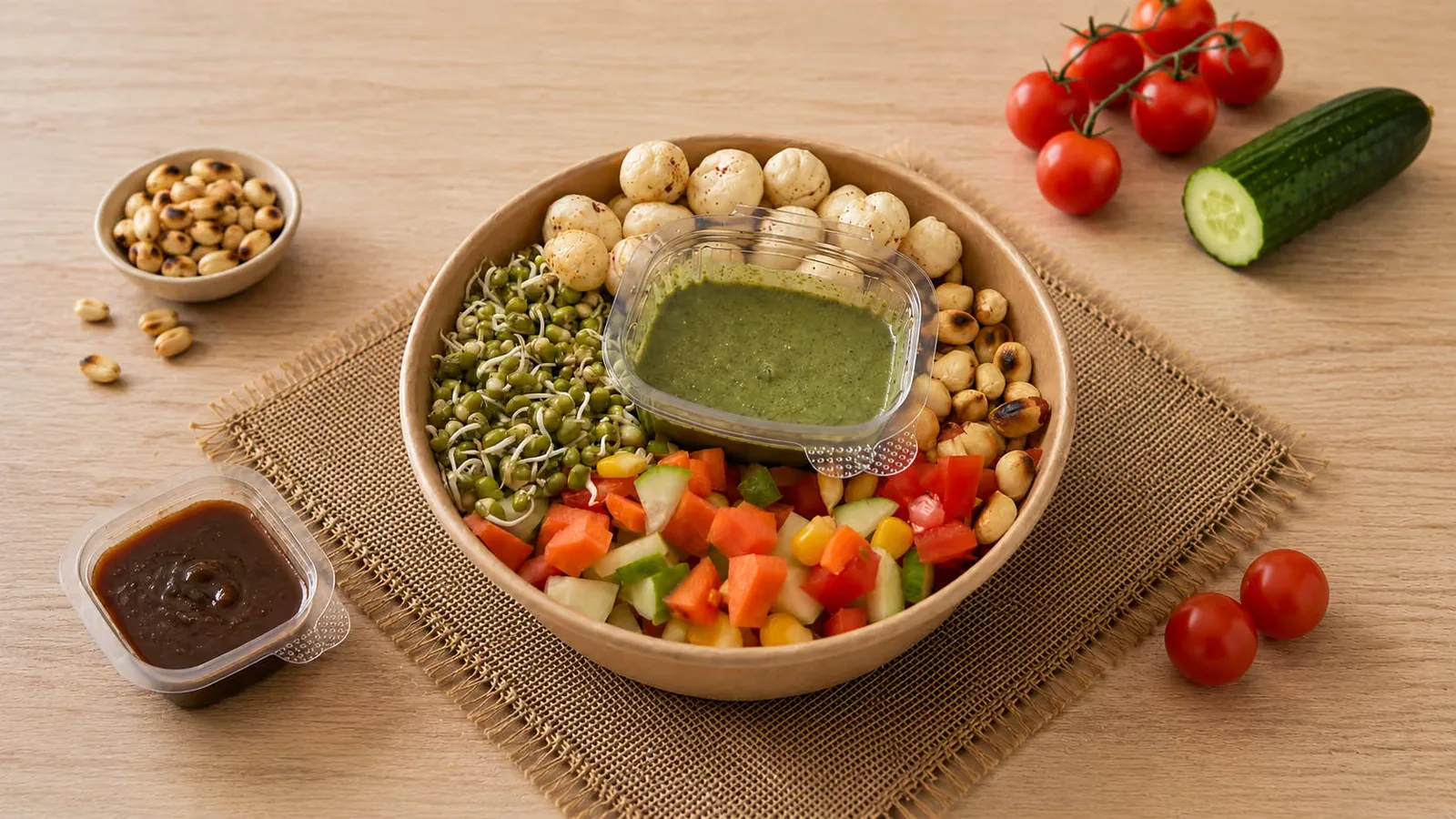
Sprouted moong is a nutritional powerhouse that requires no cooking. It is a common ingredient in Ahmedabad cuisine and pairs well with cucumber, tomato, pomegranate, and chaat masala for a quick high-protein lunch.
Edamame — 17g protein per cup
Less traditional but increasingly available. Edamame (immature soybeans) is one of the few plant sources that is a complete protein. Available frozen at most supermarkets in Ahmedabad.
Greek Yoghurt (Hung Curd) — 10g per 100g
Hung curd or thick Greek-style yoghurt can add 10g protein to a lunch with very few calories. It works as a dressing base or a side.
High-Protein Lunch Combinations That Work
Here are four practical combinations, each hitting 18g+ protein:
Finding reliably high-protein veg options on food delivery apps is difficult. Most restaurant salads are 6–10g protein. Paneer dishes are usually fried or in heavy gravy. Nutritional information is rarely disclosed.
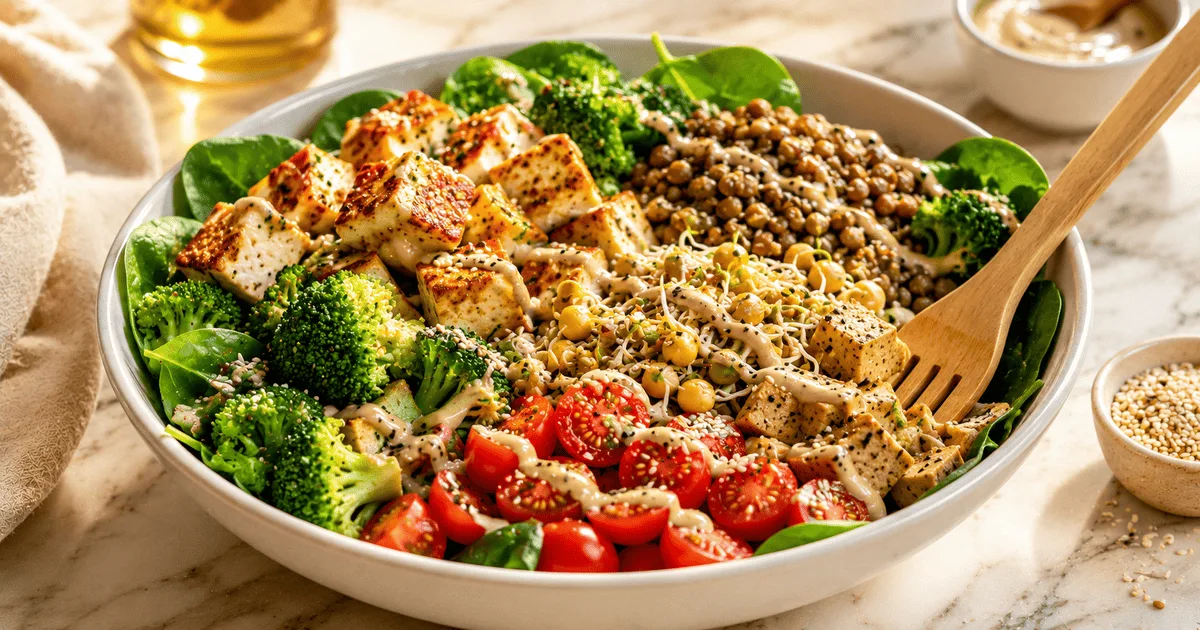
Just Salad's menu discloses protein content for every bowl and is designed around the 18–24g protein target. The weekly menu rotates through protein-forward options like Rajma Power Bowl, Paneer Tikka Salad, and Chickpea & Corn Bowl. Each bowl lists exact macros so you know what you are eating.
One Simple Rule
Pick one high-protein item as the centrepiece of every lunch — paneer, chickpeas, rajma, or sprouted moong. Everything else can be vegetables, dressing, and flavour. That single change will reliably get you to 18–22g protein without any complicated meal planning.
From our kitchen
Pick a plan, or just try one bowl
Choose Weekly or Monthly below, or start with a single ₹220 bowl first, no plan needed.
Noon 11:00 AM - 1:00 PM or Evening 7:00 PM - 9:00 PM, Monday to Saturday. Free delivery in Gota and nearby, and all along SG Highway. Skip any day until 11 PM the night before.
Can you lose weight just by changing what you eat for office lunch? Yes — if you do it right. Here is a practical, no-nonsense guide for Ahmedabad professionals.
Finding Jain-safe office lunch in Ahmedabad is harder than it should be. This guide covers what to look for, what to avoid, and where to find genuinely Jain-friendly daily delivery.
How Just Salad gets fresh produce from local suppliers to your Ahmedabad office desk every morning — and why no preservatives is a commitment, not just a claim.