How to Build a Healthy Eating Habit at Work That Actually Sticks
Most people try to eat healthier at work and fail within two weeks. Here is why habits fail — and the simple system that makes healthy office eating automatic.
Just Salad team · 4 min read
At some point, almost every working professional decides to start eating healthier at the office. They pack a salad on Monday, order from a healthy app on Tuesday, revert to biryani by Thursday, and by the following Monday they are back to the canteen.
This is not a willpower problem. It is a systems problem. Here is how to fix it.
Why Office Eating Habits Are Particularly Hard to Change
Three things make office lunch uniquely difficult to change:
Decision fatigue: By lunchtime, you have already made dozens of decisions. The last thing you want is another one. This is why people default to the same canteen or the same Swiggy restaurants — not because it is the best option, but because deciding is effortful.
Social pressure: Team lunches, "let us order together," birthday celebrations, client meetings. Office eating has a strong social component that individual healthy eating intentions constantly run up against.
No feedback loop: The effects of eating well at lunch — better afternoon energy, weight loss, better mood — take days to weeks to manifest. The reward from a satisfying biryani is immediate. When benefits are delayed and costs are immediate, habits are hard to build.
The System That Works: Automate the Decision
The single most effective change you can make is to remove the daily lunch decision entirely. Pre-commit to what you will eat, and make it arrive automatically.
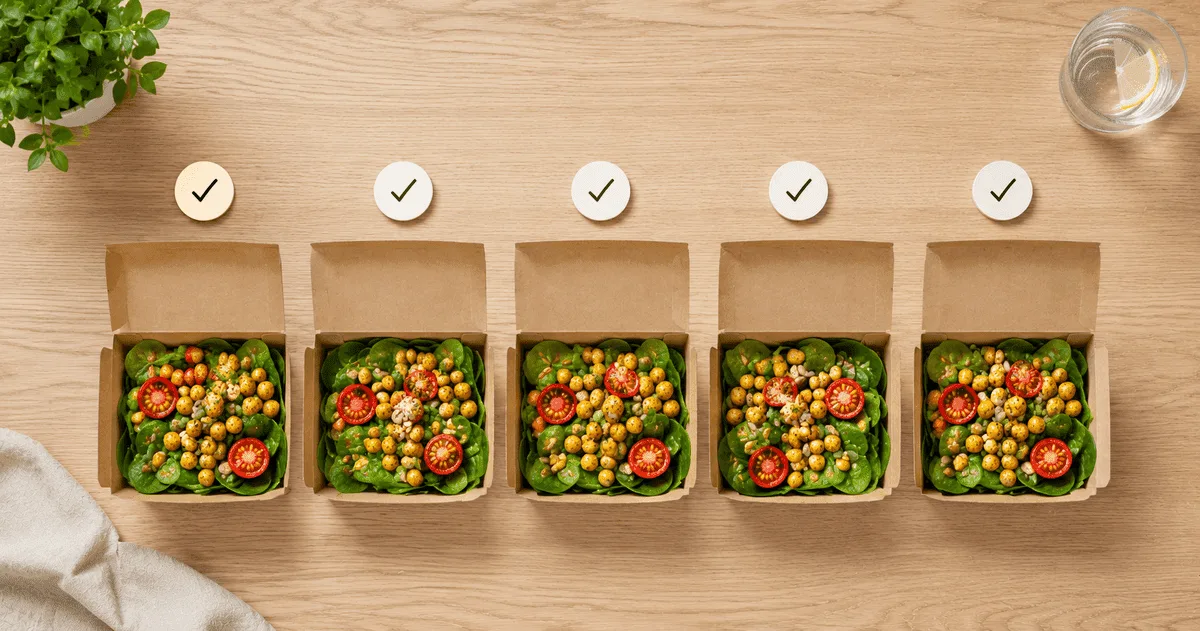
This is exactly why meal subscriptions work better than relying on willpower. When you subscribe to a weekly or monthly lunch plan, you have made one decision that covers 22 days. The food arrives without you thinking about it. Decision fatigue is eliminated. Social pressure is reduced (you already have lunch coming — it is easier to decline "let us order together" when your food is already en route).
Research on habit formation consistently shows that the biggest predictor of sustained behaviour change is removing friction from the desired behaviour and adding friction to the undesired one. A subscription plan does both simultaneously.
The Two-Week Threshold
Most people who switch to a healthier lunch routine report that the first two weeks feel somewhat forced. By week three, the new lunch feels normal. By week four, reverting to canteen food actually feels wrong — it is too heavy, you feel sluggish, and your afternoon is noticeably worse.
The key is surviving the first two weeks. The best strategy: commit to a full month upfront (easier with a subscription), not "I will try to eat healthy this week." The psychological commitment of a full month significantly increases follow-through.
Managing the Social Lunch Problem
Team lunches are unavoidable and should not be avoided — they are valuable for relationships and culture. The goal is not 22/22 perfect healthy lunches. It is 18–20/22.
A practical rule: pre-commit your lunch for every regular working day, but explicitly leave team lunch days and client meeting days unscheduled. Most subscription services allow you to skip individual days without penalty. Skip on the days you know you will eat with the team, and have the healthy option on your solo days.
The Snacking Problem
A common side effect of switching to a lighter, healthier lunch is increased afternoon snacking — especially in the first week before your body adjusts to the new satiety signals. Prepare for this:
Keep a small protein snack at your desk: a handful of mixed nuts (150 kcal, 5g protein), a boiled egg, or a small cup of hung curd
Avoid the office biscuit tin — the convenience makes it a default, not a choice
Drink water first when you feel hungry at 3–4 PM. Mild dehydration is often mistaken for hunger.
Tracking Without Obsessing
You do not need to track every calorie. But a brief weekly check-in is useful: How did I feel after lunch this week? Was my afternoon energy consistent? Did I snack more than I planned?
The goal is awareness, not precision. After 2–3 weeks of noting how different lunches make you feel, you will naturally gravitate toward options that work — without needing to consciously think about it.
Start Simple
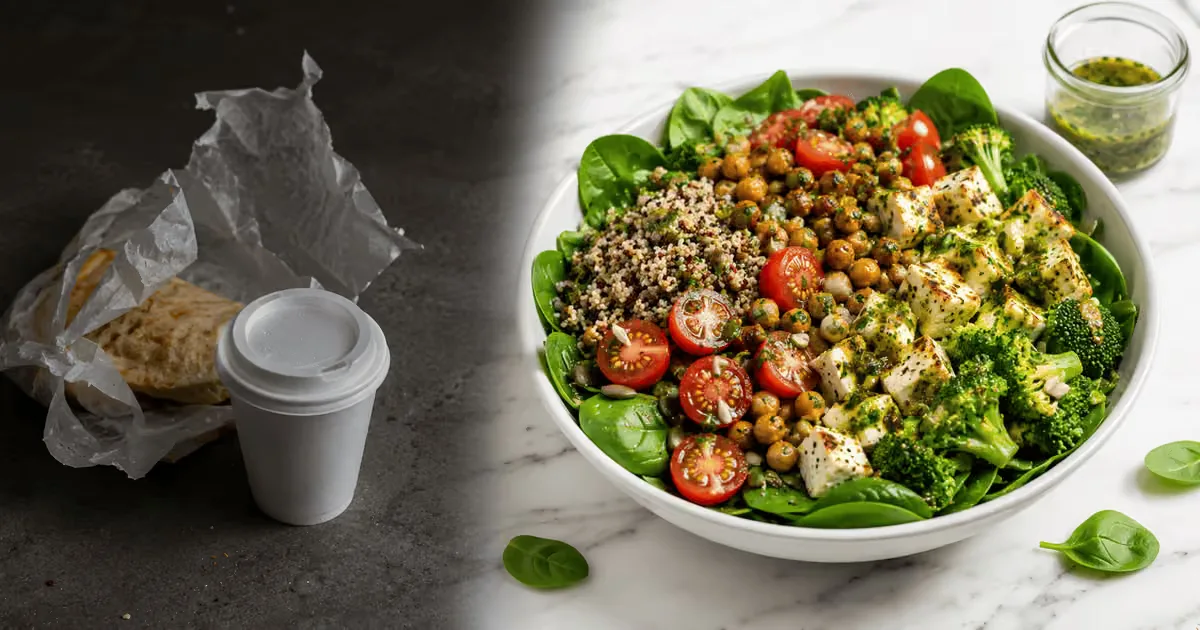
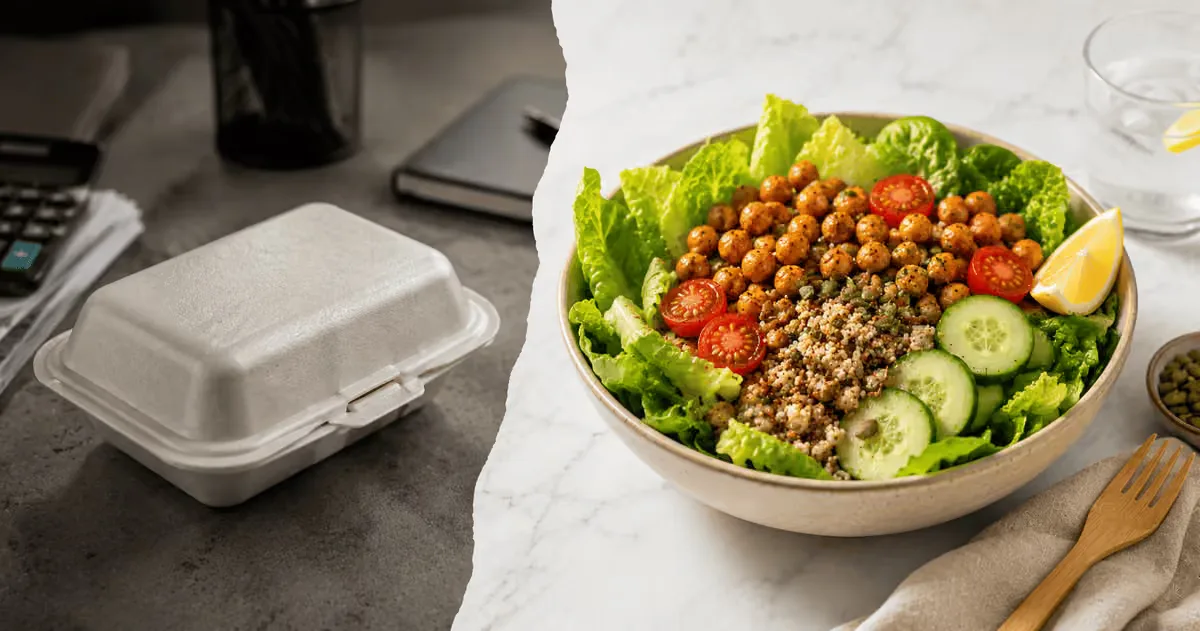
The best healthy eating habit is the one you will actually maintain. Do not try to optimise every meal from day one. Pick one change — switch from canteen food to a subscription salad delivery — and give it four weeks before evaluating. That single change, applied consistently for four weeks, will produce noticeable results in energy, weight, and afternoon productivity.
Noon 11:00 AM - 1:00 PM or Evening 7:00 PM - 9:00 PM, Monday to Saturday. Free delivery in Gota and nearby, and all along SG Highway. Skip any day until 11 PM the night before.
Most people do not connect their afternoon productivity slumps, mood swings, or constant snacking to what they ate at lunch. Here are 10 clear signals that your lunch is working against you.
The 2–3 PM energy crash is not inevitable. It is almost always caused by what you ate for lunch. Here is the science behind it and what Ahmedabad office workers can do differently.
Western salads often feel unsatisfying in an Indian context — wrong flavours, wrong portions, wrong protein. Here is how Indian-style salad bowls differ and why they actually work as a full meal.